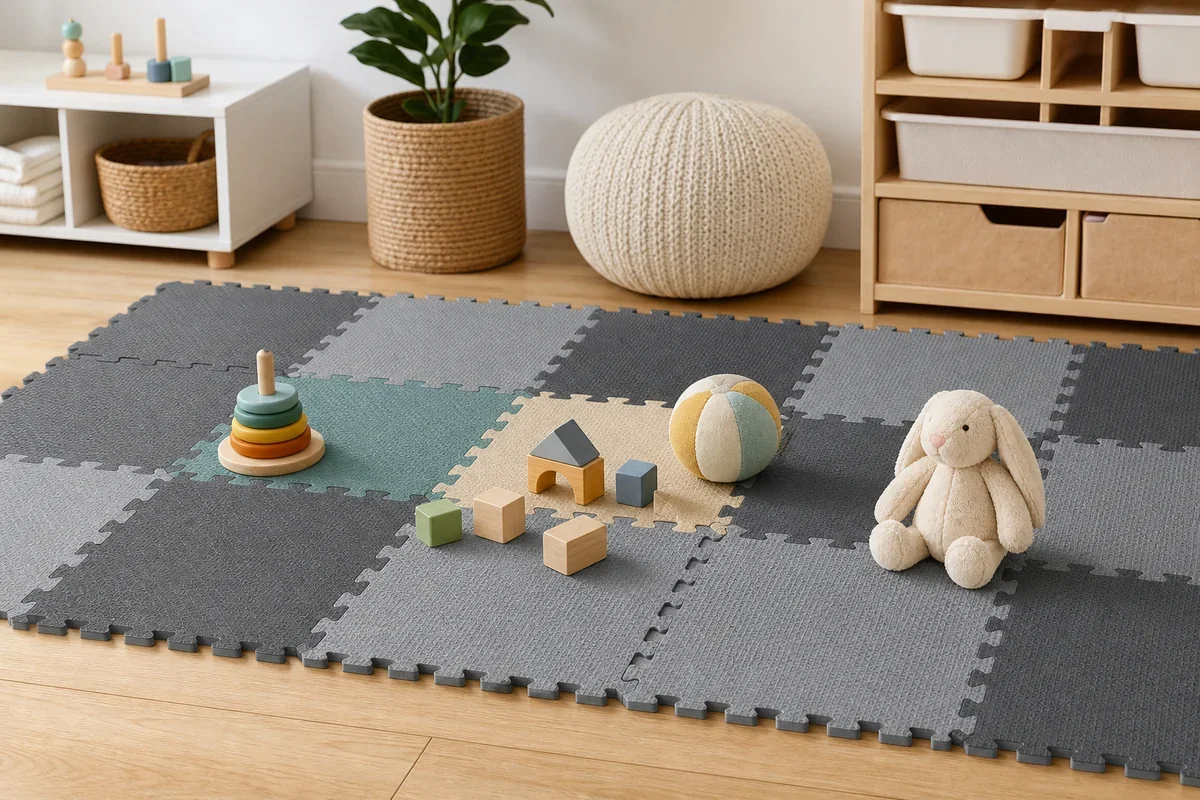
Kids deserve a space where they can run, tumble, and explore without you holding your breath every time they take a spill. You want playroom flooring that keeps them safe without making your living room look like a commercial daycare.
The good news? Safe, attractive playroom flooring exists at every price point. You don’t need to choose between protecting your child and maintaining your home’s aesthetic.
This guide covers the best playroom flooring options for every budget and age group. You’ll learn which certifications actually matter for safety, how thick your flooring should be based on your child’s age, and which options look good enough for shared living spaces.
Here’s what most parents get wrong about playroom flooring.
Quick Answer: Great playroom flooring balances safety, cushioning, and looks — start with certified low-VOC foam tiles or mats sized to your child’s age (thicker for crawlers and new walkers), then pick a finish that suits a shared living space. Interlocking foam is the easiest DIY and softest for falls; low-pile rugs or PVC tiles work where you want a tidier look. For the youngest kids, certifications matter more than thickness.
At a Glance: Top Picks
| Pick | Best For | Price | Key Feature |
|---|---|---|---|
| DURAFLEX 0.79″ | Active toddlers | ~$1.42/sq ft | Maximum cushioning |
| Designer Mats | Educational play | Contact | ABC/number patterns |
| Faux Wood | Living spaces | Contact | Realistic wood look |
| Reversible 0.51″ | Budget families | Lower | Great value |
| Solid Color | Clean aesthetic | Entry | Simple coordination |
What Makes Great Playroom Flooring?
Not all flooring works for playrooms. Your kitchen tile would be a nightmare. That plush carpet would become a permanent stain collection. Playroom flooring needs to hit specific marks that regular flooring simply misses.
Safety comes first. The floor needs to absorb impact when kids fall (and they will fall). It should be slip-resistant even when kids run in socks. And it absolutely must be non-toxic since younger children spend time on the floor and inevitably put things in their mouths.
But here’s the thing.
Durability matters almost as much as safety. Kids drag toys. They spill juice. They track in dirt and occasionally have accidents. Your playroom flooring needs to handle all of this while remaining cleanable and presentable.
Safety Certifications That Matter
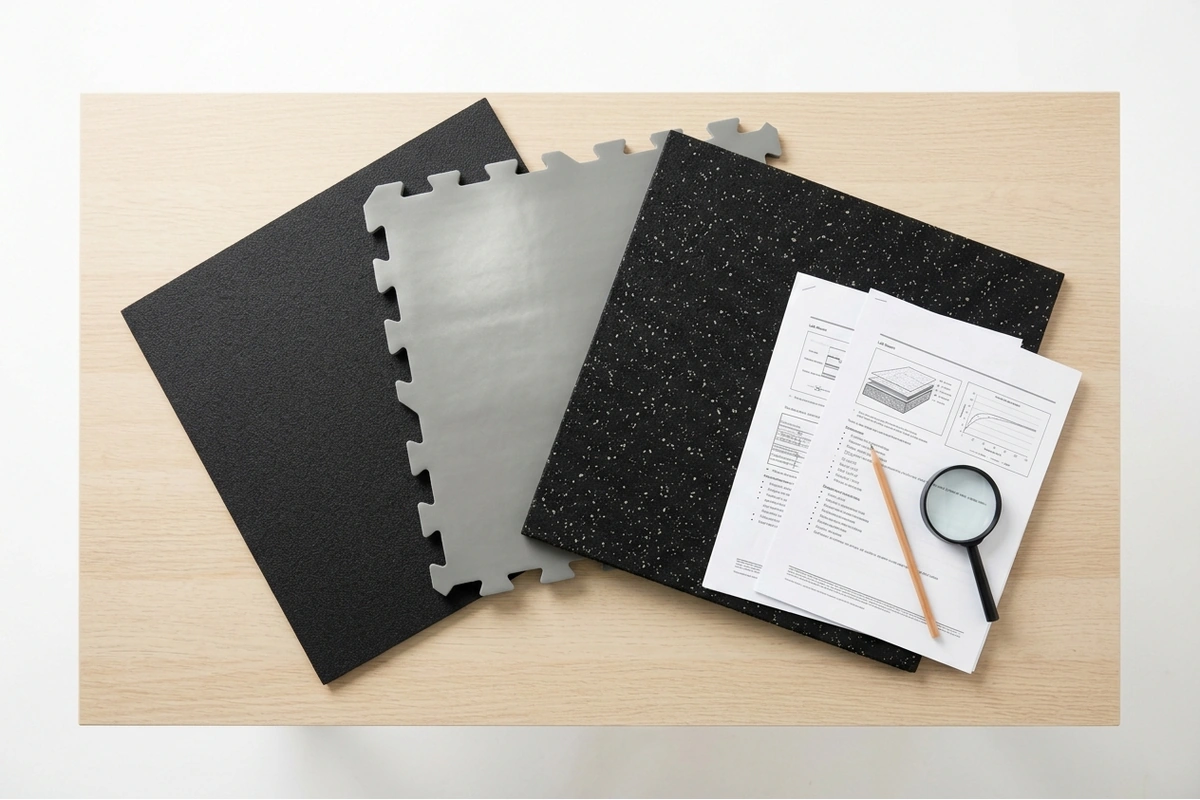
When shopping for playroom flooring, look for these certifications:
- CPSIA Certified: US consumer product safety standard for children’s products
- Formamide-free: Eliminates the main chemical concern in foam products
- Greenguard Gold: Tests for indoor air quality and chemical emissions
- BPA-free, PVC-free, Phthalate-free: Ensures no harmful plasticizers
Any foam flooring with these certifications has passed rigorous testing. Price doesn’t determine safety. A $30 certified mat provides the same chemical safety as a $300 premium option.
Not sure which mark applies to a specific product? Our flooring certifications database sets out what each standard tests and how to verify a seller’s claim.
Why Interlocking Tiles Beat One-Piece Mats
Interlocking foam tiles offer three advantages over traditional one-piece play mats.
First, they’re customizable. Configure them to fit any room shape or size. Work around furniture or create designated zones for different activities.
Second, they’re replaceable. When one tile gets damaged or stained beyond cleaning, swap it out. No need to replace the entire floor.
Third, they’re portable. Moving? Reconfiguring the room? Simply disconnect the tiles and reassemble wherever you need them.
The Best Playroom Flooring Options
DURAFLEX Reversible Foam Mats 0.79″ – Best for Active Play
Price: ~$1.42 per square foot
This is the floor your active toddler needs. The 0.79-inch thickness provides genuine fall protection. When your child inevitably takes a tumble during those chaotic play sessions, this foam absorbs the impact.
The reversible design is clever engineering. When one side shows wear from years of play, flip the tiles over for a fresh surface. You’ve essentially doubled your floor’s lifespan without buying anything new.
Key specs:
- 0.79″ (20mm) thickness for maximum cushioning
- High-density EVA foam construction
- Reversible two-color design (black/gray, black/blue, or black/red)
- 24 sq ft coverage per 4-pack
- CPSIA compliant and low VOC
Best for: Dedicated playrooms with active toddlers, tumbling zones, and areas where falls are frequent.
The catch: At this thickness, the floor has slight give. This is intentional for safety but means it’s not ideal as a permanent living room floor.
Children’s Designer Collection – Best for Learning Play
Price: Contact for current pricing
Want something that teaches while they play? The Designer Collection features ABC letters and numbers built into the tile design. Your floor becomes a learning tool.
This isn’t just decoration. Studies show environmental print exposure helps with early literacy. When kids walk across letters daily, they naturally begin recognizing them.
Key specs:
- Educational ABC and number patterns
- Same safety certifications as solid-color mats
- Modular design for pattern customization
- Interlocking system for stability
Best for: Learning corners, dedicated educational play areas, and homes where you want playtime to double as development time.
The catch: The colorful patterns work great in dedicated playrooms but may not suit living space aesthetics.
Faux Wood Foam Mats – Best for Living Spaces
Price: Contact for current pricing
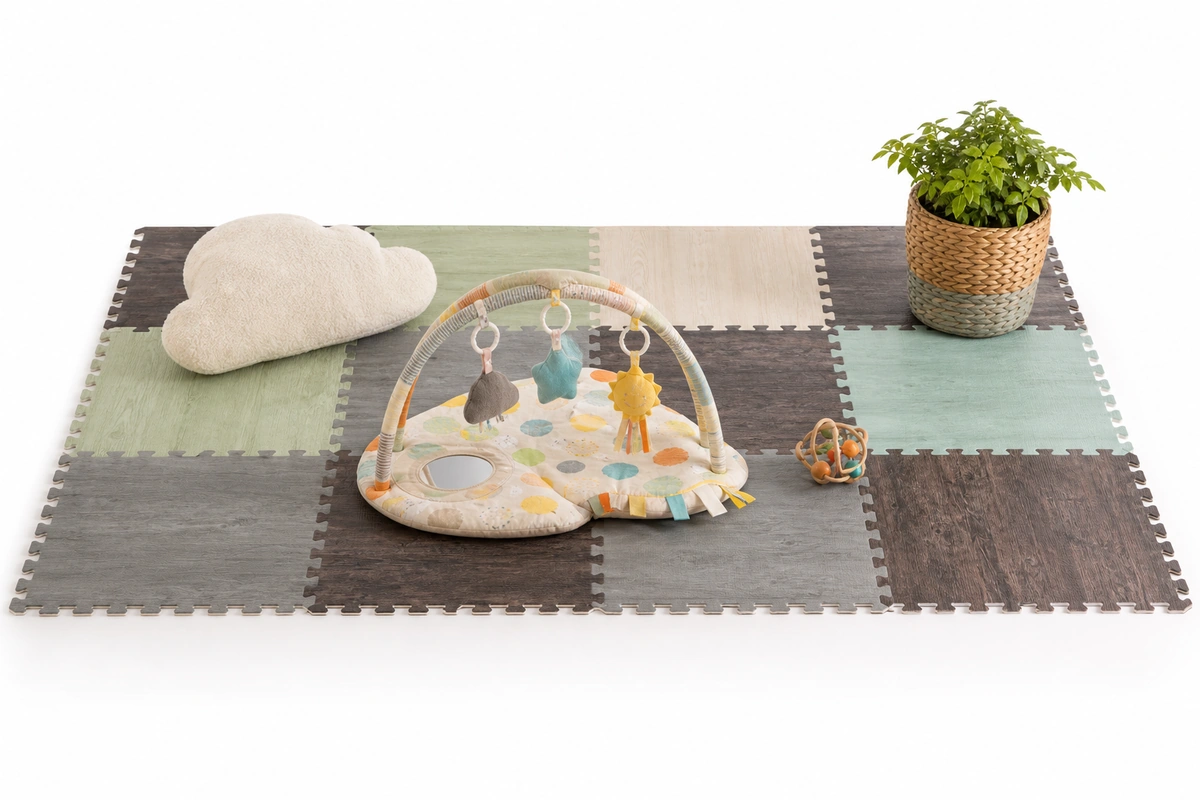
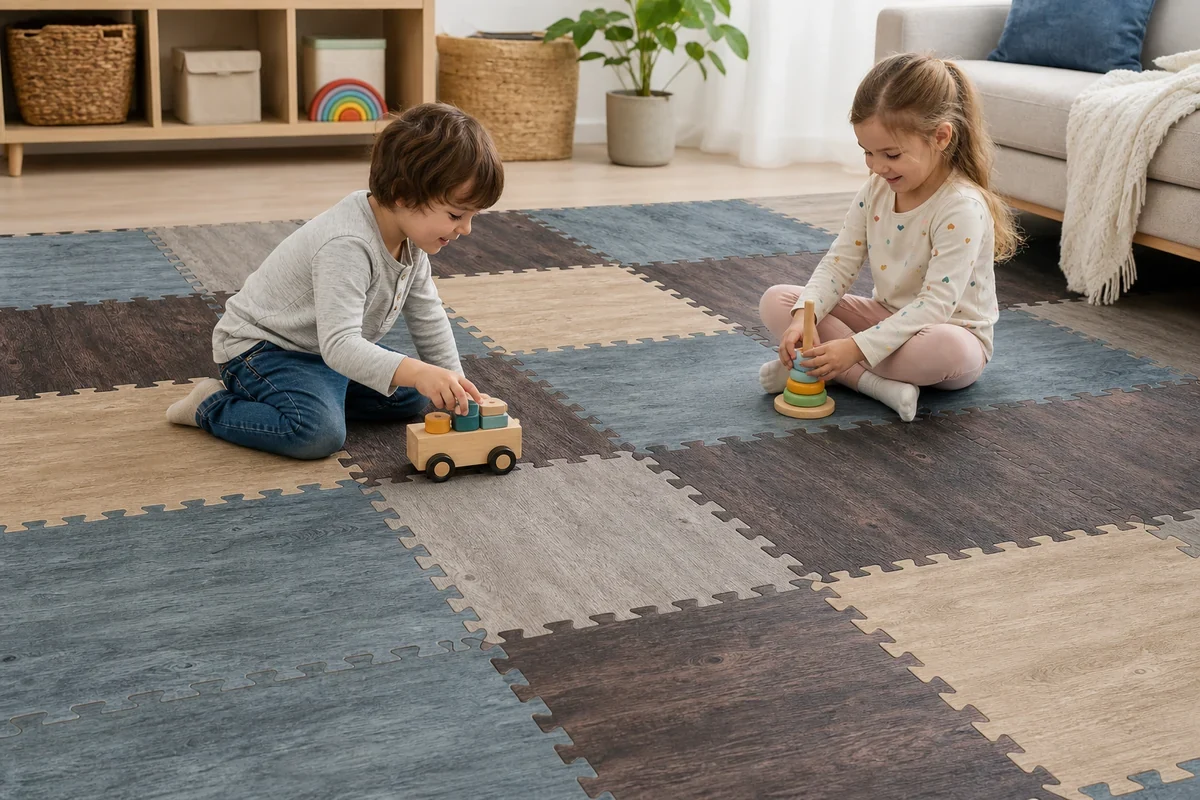
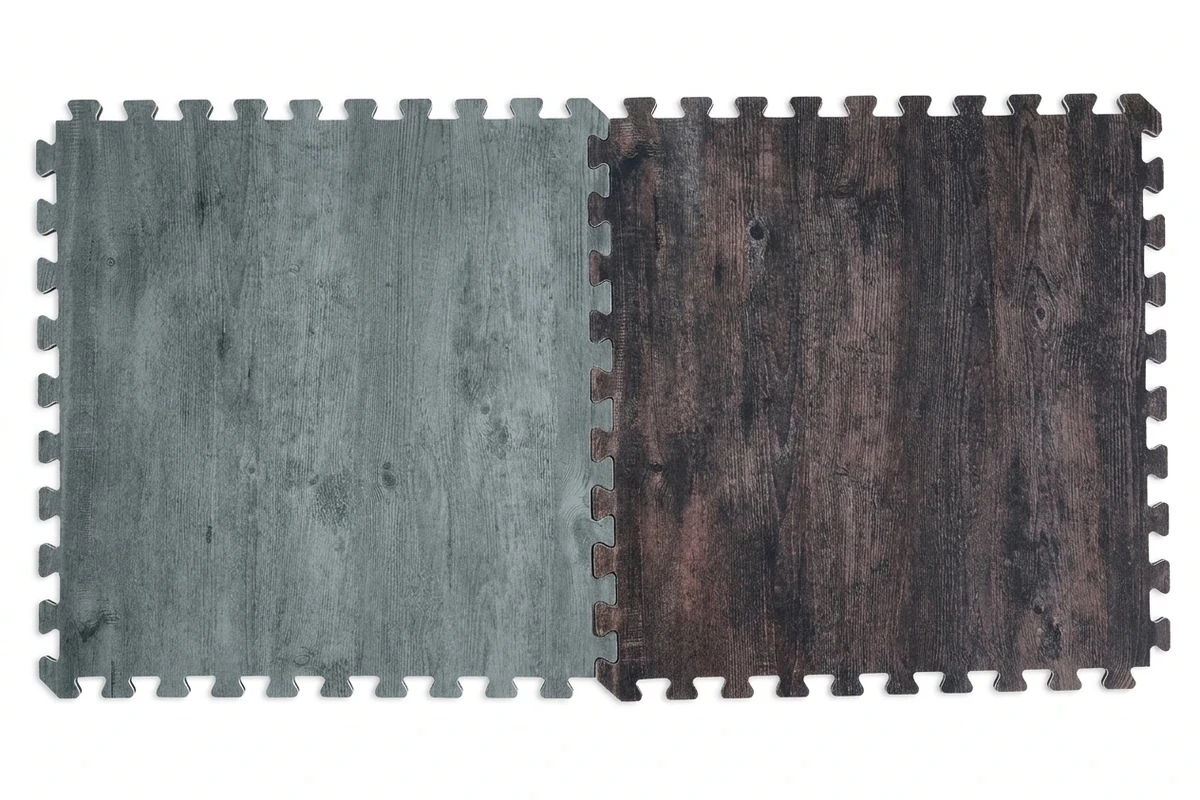
Here’s the playroom flooring that doesn’t look like playroom flooring. These tiles feature realistic wood grain patterns that blend into living spaces while providing foam cushioning underneath.
If your playroom is also your living room (hello, apartment dwellers), this is your solution. Guests won’t immediately see “kid zone.” They’ll see what looks like stylish flooring.
Key specs:
- Realistic wood grain appearance
- Foam comfort with hardwood aesthetics
- Living-space appropriate design
- Same interlocking system as standard tiles
Best for: Shared living spaces, apartments, rental properties where you need function and form.
The catch: While attractive, the wood pattern won’t fool anyone up close. It’s clearly foam. But from standing height, the illusion works well.
Standard Reversible 0.51″ – Best Value
On a tighter budget? The standard reversible mats deliver safety certification and reversible design at a lower price point.
The thinner 0.51-inch profile provides adequate cushioning for crawlers and early walkers. It’s not the maximum protection of the 0.79-inch option, but it’s absolutely sufficient for the early stages when kids aren’t yet running and jumping.
Key specs:
- 0.51″ (13mm) thickness
- Reversible two-color design
- Same interlocking system
- Individual tile replacement available
Best for: Infant play areas, budget-conscious families, and homes with crawlers rather than active jumpers.
The catch: Less fall protection than thicker options. Graduate to 0.79″ once your child becomes an active toddler.
Solid Color Foam Mats – Best Clean Look
Sometimes you just want flooring that disappears into the background. Solid color foam mats offer that clean, uniform appearance without patterns competing for attention.
Available in multiple colors, these tiles let you coordinate with your room’s color scheme. Want gray to match modern decor? Available. Prefer black for a dedicated gym and play space? Done.
Key specs:
- Clean, uniform solid color
- Multiple color options
- Standard EVA foam construction
- Entry-level pricing
Best for: Coordinated room designs, rental-friendly installations, and parents who prefer minimalist aesthetics.
The catch: No educational patterns or reversible design at this level. Pure function and form simplicity.
How Thick Should Your Playroom Flooring Be?
Here’s what trips up most parents. They assume thicker is always better. It’s not.
Thickness should match your child’s developmental stage:
| Age | Recommended | Why |
|---|---|---|
| 0-6 months | 0.4-0.5″ | Firm tummy time support |
| 6-12 months | 0.5″ | Crawling cushion |
| 12-24 months | 0.75″+ | Fall protection for walkers |
| 2-5 years | 0.75-1″ | Active play cushioning |
| 5+ years | 0.5-0.75″ | Less fall risk, still comfortable |
Excessive thickness can actually destabilize early walkers. The give in very thick foam can cause wobbling. Match your floor to where your child is now, not where they’ll be in two years.
For multi-age households, default to 0.75″ as the sweet spot. It protects toddlers without creating instability issues. See our toddler play mats guide for age-specific thickness recommendations.
DIY Installation: Easier Than You Think
Never installed flooring before? No problem.
Interlocking foam tiles require zero tools and zero expertise. The puzzle-piece edges snap together by hand. A typical 100 sq ft playroom takes under an hour to install.
Step-by-step installation:
- 1Measure your room: Length times width gives you square footage
- 2Add 5-10% extra: Account for cutting and spare tiles
- 3Clean the subfloor: Remove debris for flat installation
- 4Start from one corner: Work outward systematically
- 5Interlock tiles: Press edges together until they click
- 6Cut edge pieces: Use a utility knife for walls and obstacles
- 7Add edge strips: Create a finished perimeter look
The beauty of interlocking tiles is forgiveness. Made a mistake? Pull tiles apart and reconfigure. No adhesive means no permanent decisions.
For a complete guide on foam mat safety and installation best practices, see our non-toxic foam play mats guide.
Keep It Clean: Maintenance Tips
Kids are messy. Here’s how to handle it.
Daily maintenance: Quick sweep or vacuum to remove debris. Takes two minutes.
Weekly cleaning: Damp mop with mild soap and water. Avoid harsh chemicals that could degrade foam or leave residue children might contact.
Spill response: Wipe immediately. If liquid seeps between tiles, lift them for access. This is another advantage of interlocking systems.
Deep cleaning: Individual tiles can be removed and washed in a tub or with a hose. Let them dry completely before reinstalling.
Pro tips:
- Let new mats air out 24-48 hours before use (reduces new product smell)
- Flip reversible mats every 3-6 months to distribute wear
- Replace individual damaged tiles rather than the entire floor
- Avoid leaving heavy furniture on one spot long-term (can create impressions)
Frequently Asked Questions
Is foam flooring safe for babies?
Yes, when properly certified. Look for CPSIA certification and “formamide-free” labeling. Quality foam mats meet rigorous safety testing for lead, phthalates, and harmful chemicals. Let new mats air out for 24-48 hours before your baby uses them. If strong chemical odor persists beyond 72 hours, consider returning the product.
Can I use playroom flooring over carpet?
Yes, but use thinner mats under 0.5 inches. Thick foam over carpet creates an unstable surface that can increase fall risk for new walkers. The double cushioning sounds safe but actually creates wobble. Foam tiles work best over hard floors like concrete, hardwood, or laminate where they provide both cushioning and stable support.
How do I calculate how much flooring I need?
Measure your room’s length and width in feet. Multiply for total square feet. Add 5-10% for cutting waste and spare tiles for future repairs. For example: a 12×10 foot playroom equals 120 sq ft. Adding 10% gives you 132 sq ft to order. Norsk foam tiles cover 24 sq ft per pack, so you would need 6 packs.
What’s the difference between foam tiles and foam mats?
Foam tiles interlock like puzzle pieces for customizable coverage. Traditional foam mats are single pieces with fixed dimensions. Tiles offer flexibility to configure any shape, easy replacement of individual damaged tiles, and portability to reconfigure or move. Mats provide a seamless surface but with less flexibility and no partial replacement option.
How long do foam playroom floors last?
Quality foam tiles last 3-5 years with typical playroom use. Reversible designs can double this lifespan by flipping when one side shows wear. Actual durability depends on traffic, activities, and maintenance. Individual tile replacement extends overall floor life without requiring full replacement. Budget mats may show significant wear within 1-2 years.
Are foam tiles slippery?
Quality foam tiles have textured surfaces specifically designed for grip. They’re actually safer than hardwood or tile when children run in socks. Avoid mats with glossy finishes. Look for EVA foam with diamond plate, pebble, or similar textured surfaces. Norsk mats feature anti-slip surfaces engineered for active play.
Ready to Transform Your Playroom?
Your kids deserve a safe, comfortable space to play. The right flooring makes every tumble softer and every cleanup easier.
Whether you choose thick DURAFLEX for active toddlers, educational Designer mats for learning play, or aesthetic faux wood for your living room, certified foam tiles deliver safety without compromising your home’s look.
Start with your child’s age and activity level. Match the thickness. Choose a style that works for your space. Installation takes an afternoon. The protection lasts years.