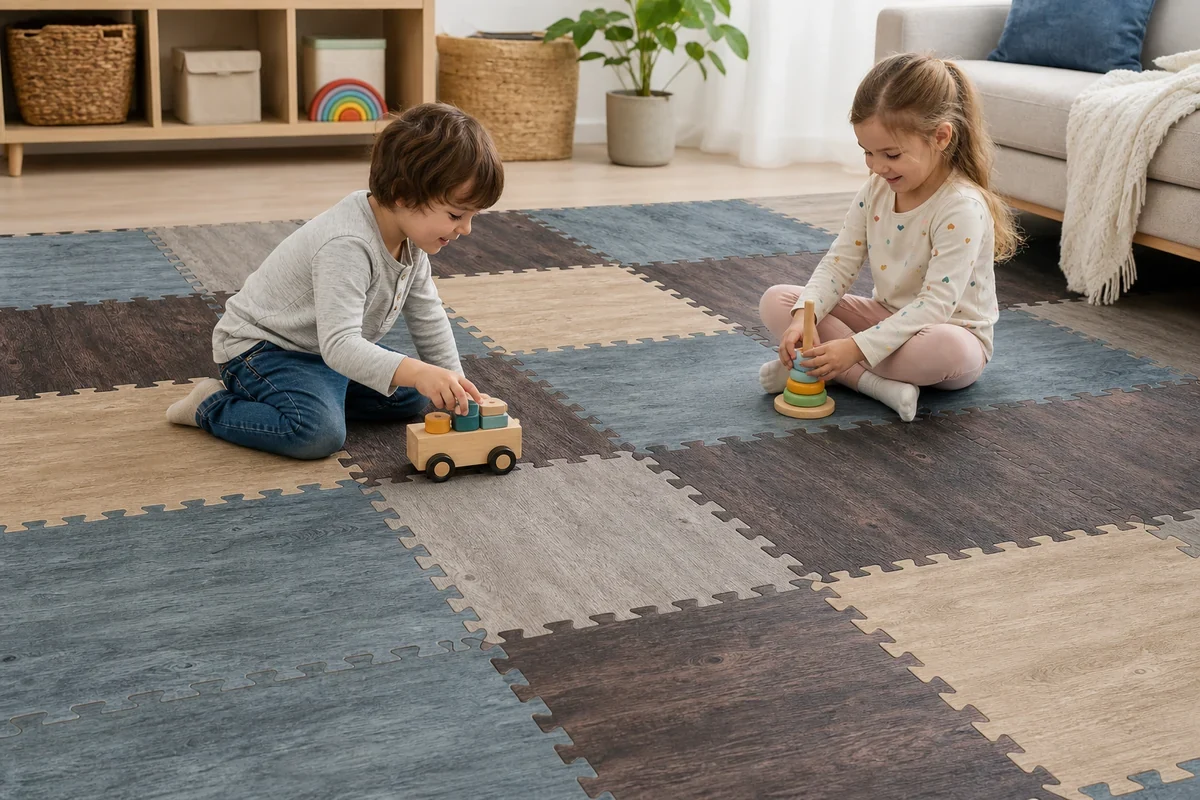
Watching your toddler take those wobbly first steps is exciting—until they tumble face-first into hardwood. Every parent knows that heart-stopping moment when tiny legs give out on a hard floor.
The right play mat turns dangerous surfaces into safe landing zones for active toddlers.
This guide ranks play mats by what actually protects a jumping, running, tumbling toddler: thickness and impact absorption. The short answer — for kids who have moved past crawling, 0.75–0.8 inches of dense foam is the protection tier that matters; thinner mats are for crawlers. We cover exactly which thickness fits which activity stage below.
One scope note: this is the impact protection guide. If your first question is chemical safety and certifications, start with our safest non-toxic play mats guide — it ranks mats by lab testing instead of thickness.
Let’s get into it.
Quick Answer: Once toddlers start jumping and climbing, 0.75-0.8 inches of dense foam is the thickness tier that actually protects against falls — thinner mats are fine for babies but not active toddlers. Prioritize lab-certified, low-VOC foam over bargain imports, and pick interlocking tiles or a folding mat you can wipe clean. For the safety-first deep dive, pair this with our non-toxic play mats guide.
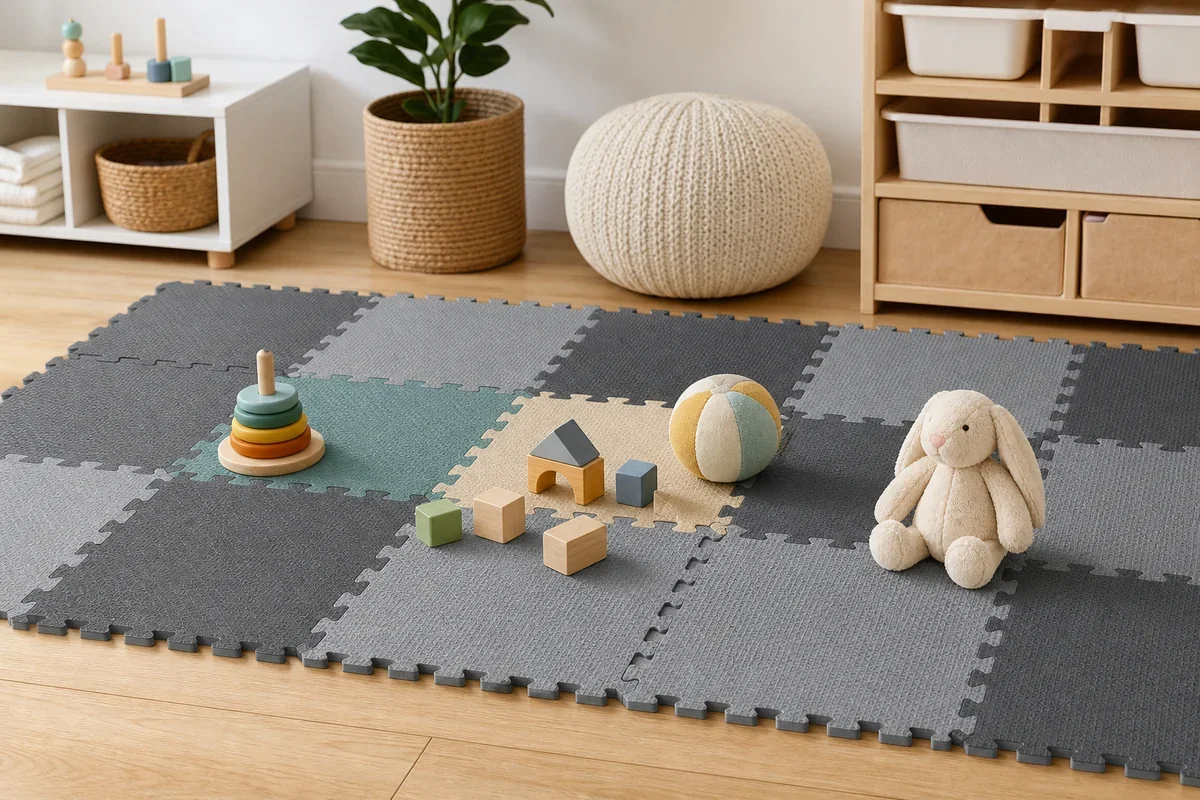
How We Evaluated
We analyzed manufacturer specifications, safety certifications, and hundreds of parent reviews to find mats that actually protect active toddlers.
Our criteria:
- Thickness: 0.5″ minimum, 0.75″+ for active play
- Safety: CPSIA certified, BPA/PVC/phthalate-free
- Durability: Withstands daily toddler chaos
- Price: Real cost per square foot
- Cleaning: Easy to wipe spills and messes
Here’s what made the cut.
Quick Picks
| Category | Product | Price | Best For |
|---|---|---|---|
| Best Overall for Impact | Norsk DURAFLEX 0.79″ | $34 | Thickest cushion in this roundup — jumpers and tumblers |
| Best Portable / Small Spaces | Skip Hop Foam | ~$70 | Reconfigurable tiles, brand trust |
| Best Premium | Baby Care | $198 | Design-conscious parents |
| Best Budget | Tadpoles ABC | $30 | Tight budgets, light play |
| Best Large | Wee Giggles | $100 | Full playroom coverage |
The 5 Best Toddler Play Mats
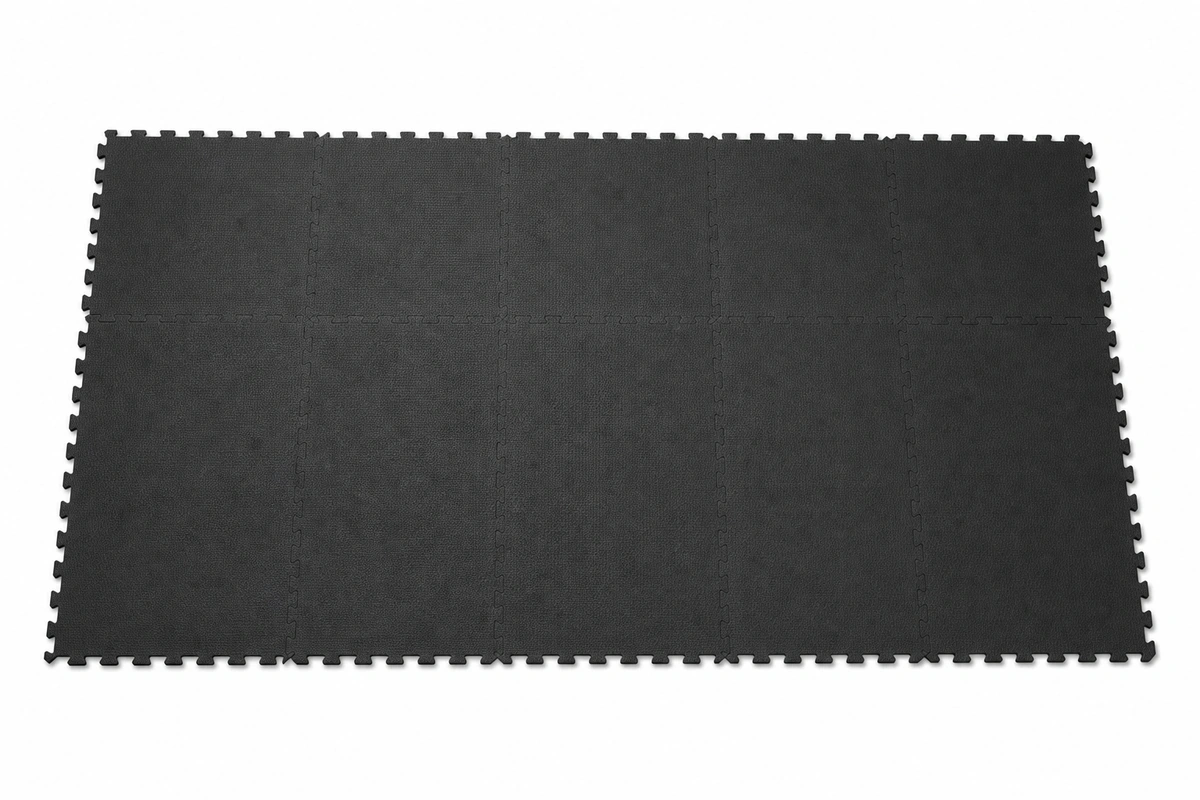
Skip Hop Foam Interlocking Playmat – Best Portable & Small Spaces
Best for: Small spaces, travel, and parents who reconfigure the play area often
Skip Hop built its reputation on quality baby gear, and this playmat delivers. The 0.75″ thick EVA foam provides genuine cushioning for tumbling toddlers—not just crawlers.
The interlocking design means you can configure it to fit any space. And the playful patterns actually look good in a living room.
Key specs:
- Thickness: 0.75″
- Material: EVA foam (BPA, PVC, phthalate-free)
- Coverage: ~20 sq ft
- Price: ~$3.50/sq ft
The catch: You’re paying for the brand name. Similar specs cost 50% less elsewhere.
Norsk DURAFLEX Reversible Foam Mats – Best Overall for Impact
Best for: Jumpers, runners, and tumblers — the most impact protection per dollar in this roundup
Here’s the deal:
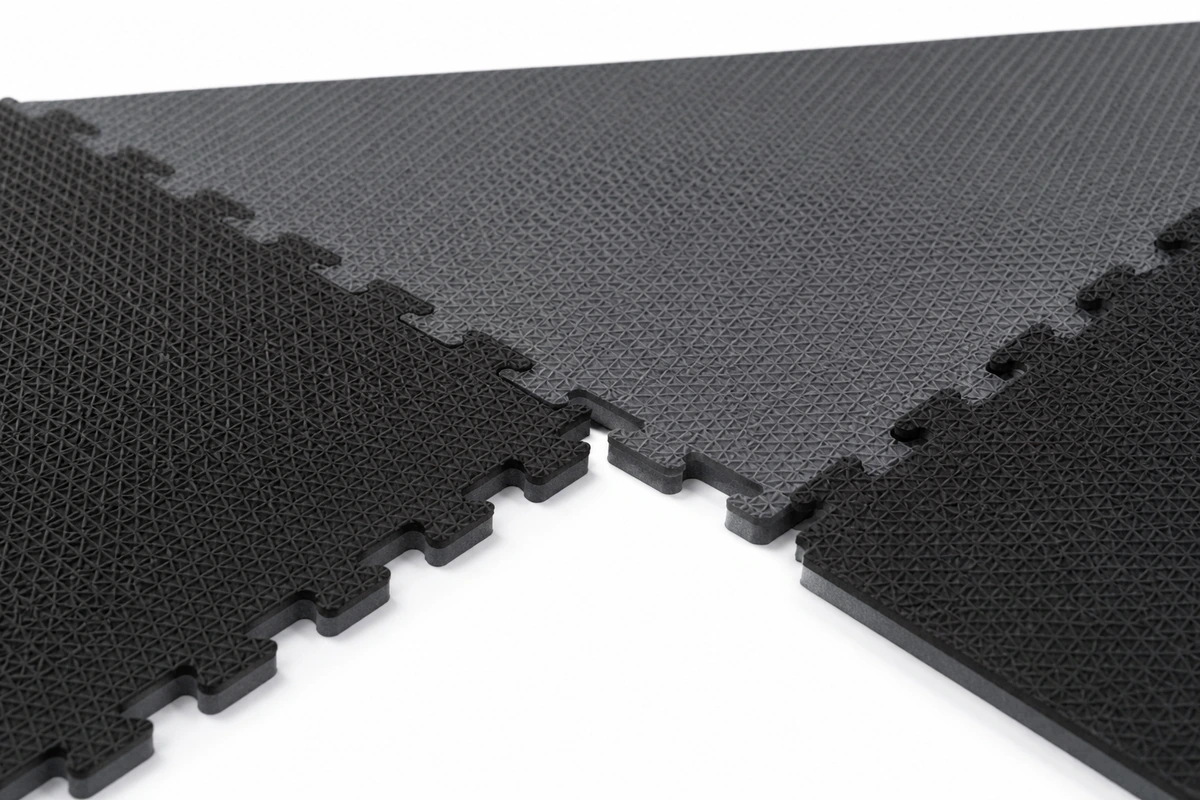
At 0.79″ (20 mm), the Norsk DURAFLEX is the thickest mat in this roundup — thicker than every premium competitor here — which is exactly the spec that matters once your toddler starts jumping off furniture. It wins Best Overall because impact protection is what an active-toddler mat is for.
The reversible design doubles the lifespan. When one side shows wear, flip it over. CPSIA certification means it meets strict safety standards for children’s products.
At just $1.42 per square foot, you’re getting 80% savings compared to premium brands with nearly identical specs.
Key specs:
- Thickness: 0.79″ (20mm)
- Material: High-density EVA foam
- Coverage: 24 sq ft per 4-pack
- Price: $33.99 (~$1.42/sq ft)
- Safety: CPSIA certified, non-toxic
The catch: Neutral colors only (black/gray, black/blue). No cute animal prints.
Baby Care Play Mat – Best Premium
Best for: Design-focused parents who want aesthetics
Baby Care mats look stunning. The reversible designs feature modern patterns that complement adult decor—not scream “baby lives here.”
The single-piece construction means no gaps for crumbs to hide in. Cleanup takes seconds.
Key specs:
- Thickness: 0.5″
- Material: Non-toxic foam
- Coverage: ~40 sq ft
- Price: ~$198 (~$4.95/sq ft)
The catch: Beautiful but thin. At 0.5″, it’s better for crawlers than active walkers. And that price stings.
Tadpoles ABC Foam Mat – Best Budget
Best for: Tight budgets and learning play
The Tadpoles alphabet mat serves double duty: floor protection and early learning. Kids can pull out letters and numbers for hands-on play.
At under $1 per square foot, it’s the cheapest way to cover a play area.
Key specs:
- Thickness: 0.4″
- Material: Basic EVA foam
- Coverage: ~36 sq ft
- Price: ~$30 (~$0.83/sq ft)
The catch: Only 0.4″ thick. Fine for crawling babies, but too thin to cushion falls from walking height. Upgrade when your toddler gets more active.
Wee Giggles Non-Toxic Playmat – Best for Large Spaces
Best for: Full playroom coverage
Wee Giggles offers generous coverage with certified non-toxic materials. The neutral designs work in any room without looking childish.
Good option if you need to cover a large dedicated playroom. For more layout and material options, see our playroom flooring ideas guide.
Key specs:
- Thickness: 0.5″
- Material: Non-toxic foam
- Coverage: ~25 sq ft
- Price: ~$100 (~$4.00/sq ft)
The catch: Medium thickness at a premium price. You’re paying for the non-toxic certification and aesthetics.
Toddler Play Mat Comparison
| Feature | Skip Hop | Norsk | Baby Care | Tadpoles | Wee Giggles |
|---|---|---|---|---|---|
| Thickness | 0.75″ | 0.79″ | 0.5″ | 0.4″ | 0.5″ |
| Material | EVA | EVA | Foam | EVA | Foam |
| Price | ~$70 | $34 | $198 | $30 | $100 |
| Coverage | 20 sq ft | 24 sq ft | 40 sq ft | 36 sq ft | 25 sq ft |
| $/sq ft | $3.50 | $1.42 | $4.95 | $0.83 | $4.00 |
| Non-Toxic | Yes | Yes | Yes | Basic | Yes |
| Best For | Overall | Value | Premium | Budget | Large Spaces |
How to Choose the Right Thickness
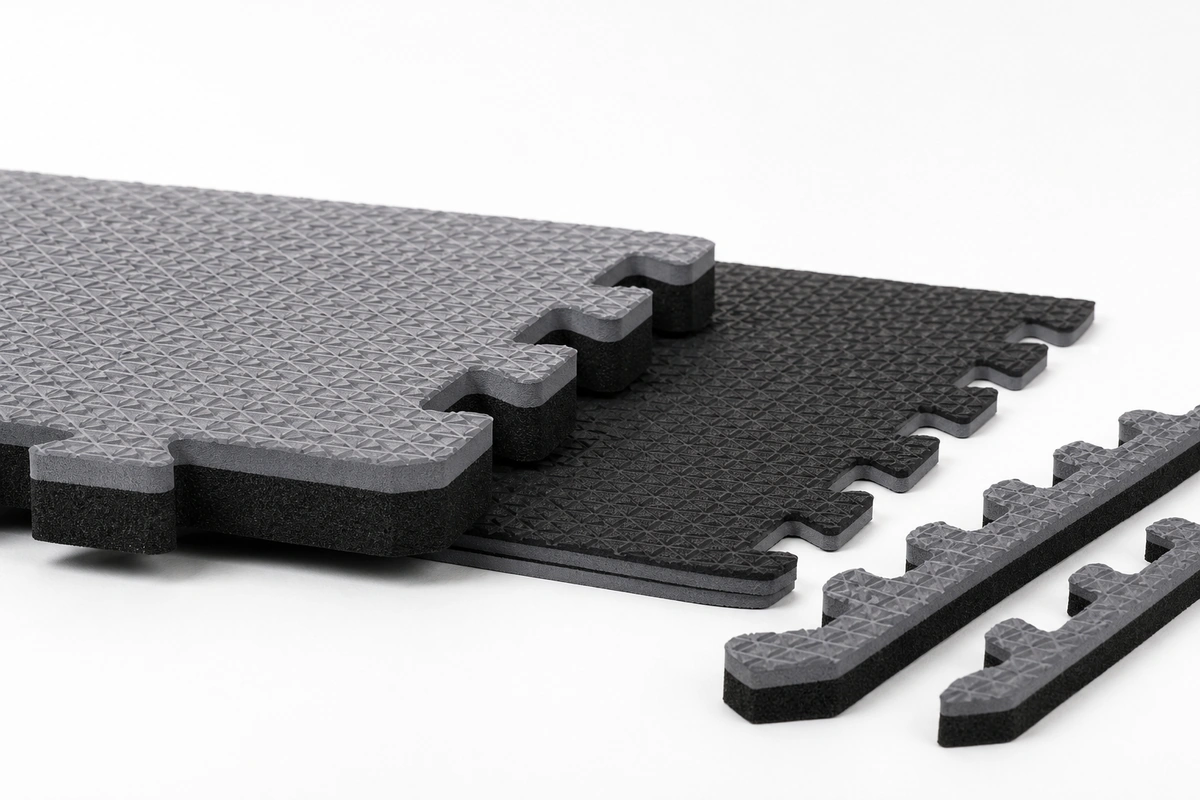
Match thickness to your toddler’s activity stage: crawlers need 0.5″, early walkers 0.5–0.75″, and confirmed jumpers, runners, and climbers need 0.75″+ of dense foam.
Thickness matters more than brand when it comes to actual fall protection. A 0.4″ mat looks similar to a 0.8″ mat—but the impact absorption is completely different.
By activity level:
- Crawlers (6-12 months): 0.5″ works fine
- Early walkers (12-18 months): 0.5-0.75″ recommended
- Active toddlers (18-36 months): 0.75″+ essential
- Tumbling and jumping: 0.79″+ minimum
By floor type:
- Hardwood or tile: Go thicker (0.75″+). Hard floors offer zero give.
- Thin carpet (Berber): 0.5″ may work since carpet adds some cushion.
- Thick carpet: Mats may shift or buckle. Consider securing edges.
The math is simple. A thicker mat costs more upfront but prevents more injuries. The Norsk 0.79″ hits the sweet spot—maximum thickness at minimum cost.
For more safety information, check our complete non-toxic play mat guide.
Bottom Line
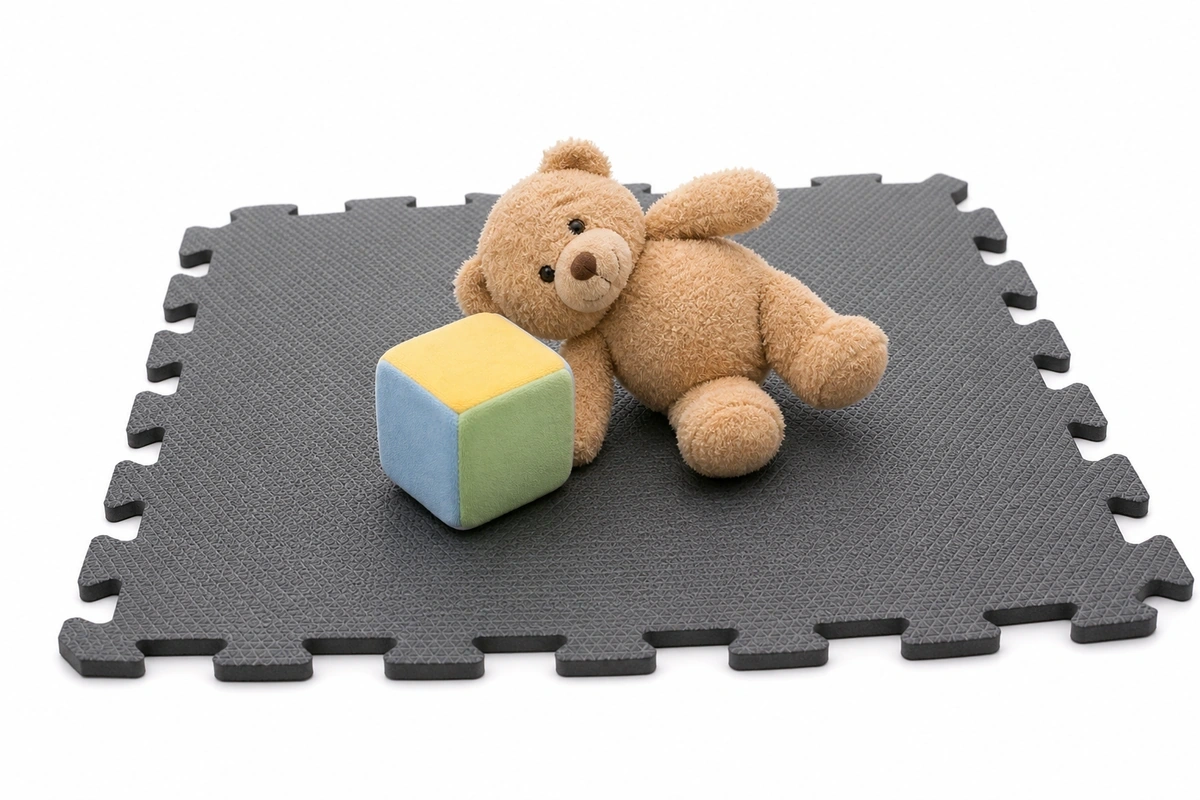
For most families: Norsk DURAFLEX ($34). Thickest mat at the lowest price per square foot. CPSIA certified safety. Hard to beat.
For brand-conscious parents: Skip Hop ($70). Trusted name, cute designs, solid 0.75″ thickness.
For design-forward homes: Baby Care ($198). Gorgeous patterns, but watch the thin foam.
For tight budgets: Tadpoles ($30). Fine for light play—upgrade when toddler gets more active.
Action Plan
- 1Measure your space – Calculate square footage needed for coverage
- 2Consider activity level – Crawling vs walking vs tumbling determines thickness
- 3Set your budget – Expect $1-5 per square foot
- 4Check safety certs – Look for CPSIA, BPA-free, phthalate-free; our flooring certifications database shows what each mark covers
- 5Order extra tiles – Add 10% buffer for edges and replacements
Frequently Asked Questions
How thick should a toddler play mat be?
0.75″ minimum for active toddlers. Thinner mats (0.4-0.5″) work for crawlers but don’t cushion falls from walking height. For tumbling and jumping, go 0.79″ or thicker.
Are foam play mats safe for toddlers?
Yes, when CPSIA certified. Look for mats tested for formamide, BPA, and phthalates with CPSIA/CPSC certification. For the full safety testing breakdown, see our non-toxic foam play mats guide.
How many play mat tiles do I need?
Divide your space’s square footage by the tile coverage. A 10×10 ft playroom needs about 100 sq ft of coverage. Add 10% extra for edge pieces and future replacements.
Can toddler play mats go on carpet?
Yes, but best on thin, dense carpet like Berber. On thick plush carpet, mats may shift or buckle when walked on. Hard floors (tile, hardwood, laminate) provide the most stable base.
How do you clean toddler play mats?
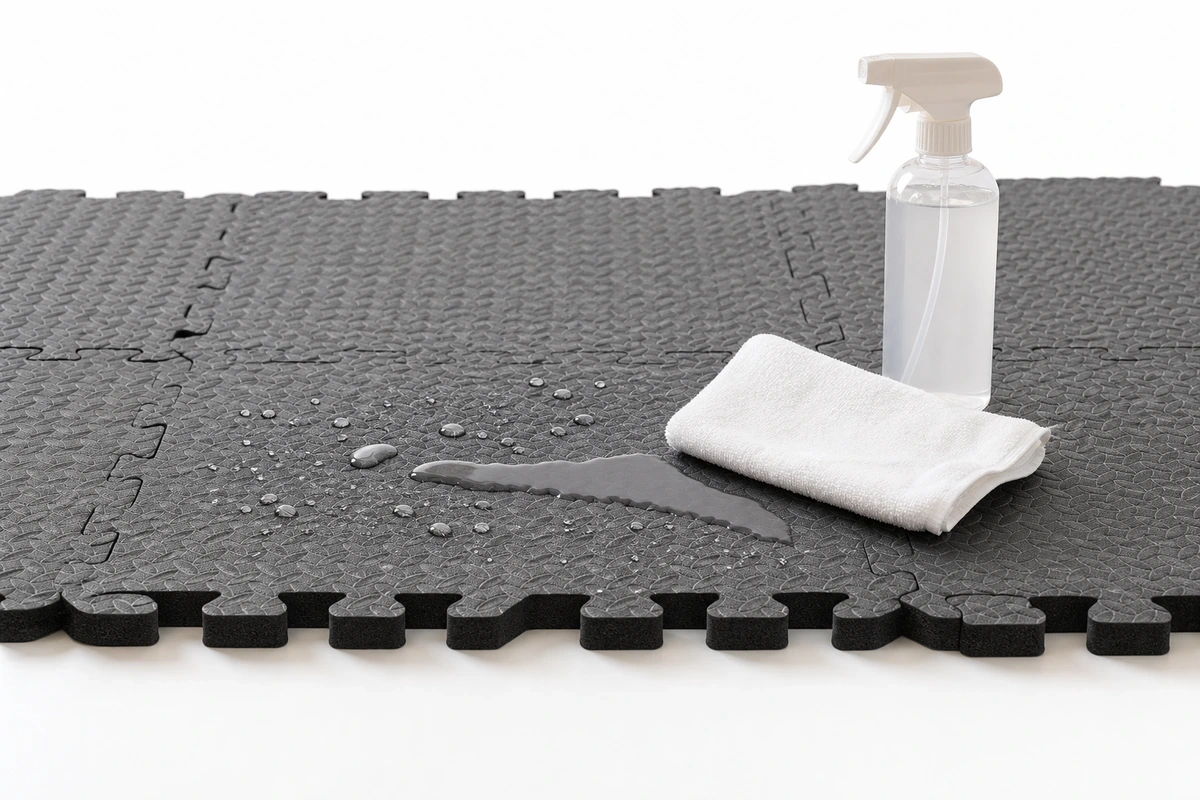
Wipe with damp cloth and mild soap for daily messes. For deep cleaning, separate the tiles and hose down outside. Let dry completely before reinstalling. Most EVA mats are water-resistant.
Do play mats reduce noise?
Yes. Foam mats absorb impact noise from running and jumping feet. Great for apartments or rooms above living spaces. Thicker mats provide more noise reduction. If noise is your top concern, see our apartment gym flooring guide for soundproofing tips.
Ready to Protect Your Active Toddler?
Create a safe play zone that grows with your child. Norsk foam mats offer certified safety at 80% less than premium brands—with the thickest foam in the budget category.
Shop Foam Play Mats
Browse All Kids Flooring
Related Guides
- Best Anti-Fatigue Mats – Comfort for parents standing during playtime
- Best Home Gym Flooring – Multi-purpose foam mats for active families
- Playroom Flooring Ideas – Complete guide to designing safe, fun play spaces