Updated June 11, 2026 — certification explainer expanded with primary sources (CPSC, UL, CertiPUR-US).
You want the safest play mat for your baby — the healthiest, most natural option with no formaldehyde, no formamide, and no phthalates. That’s not a marketing wish; it’s a specific certification bar you can verify.
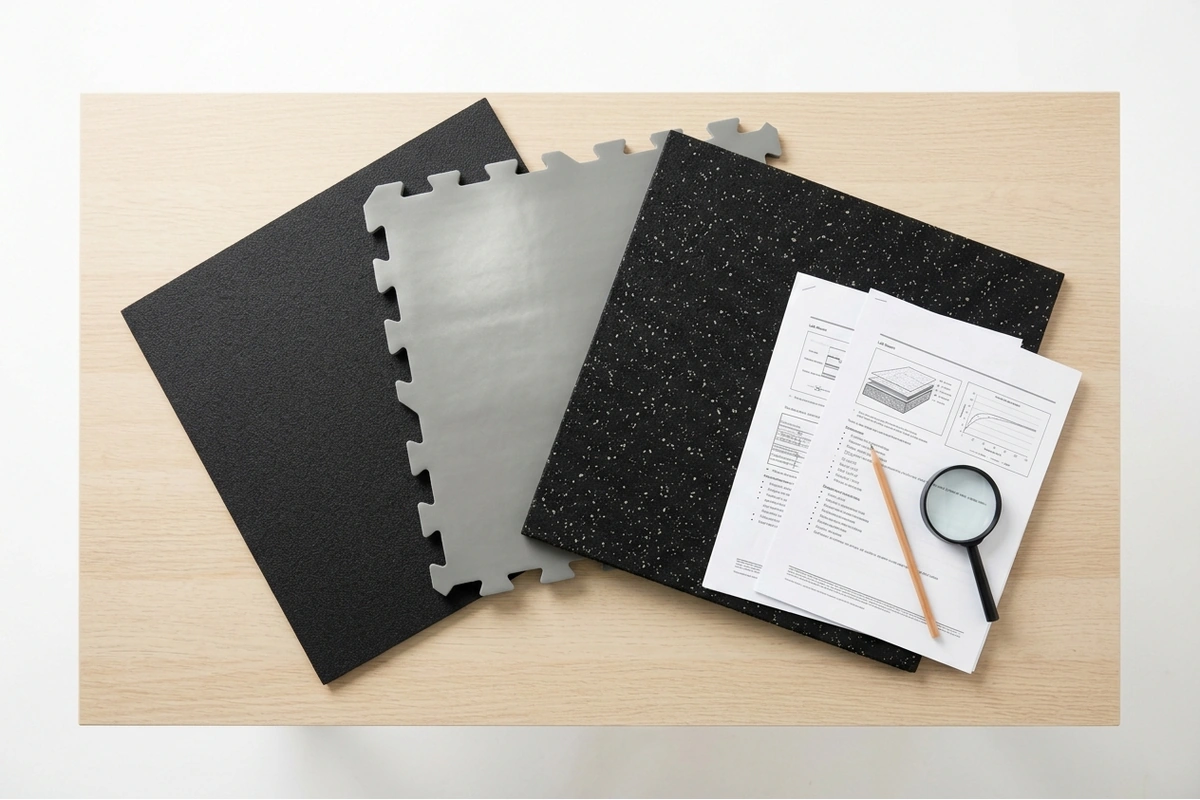
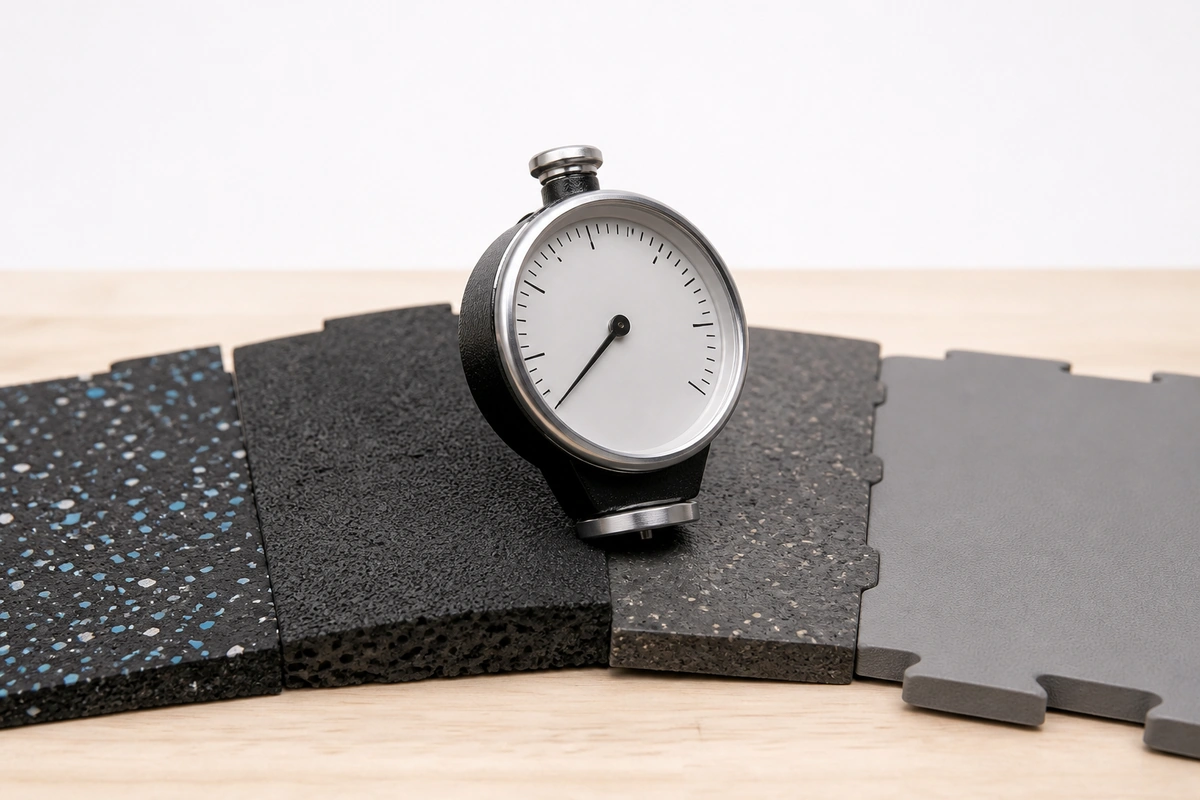
The good news: safe, non-toxic foam play mats exist at every price point. The healthiest mats aren’t always the most expensive ones — they’re the ones with real third-party lab testing (CertiPUR-US, Greenguard Gold, CPSIA, formamide-free documentation) that you can check before buying.
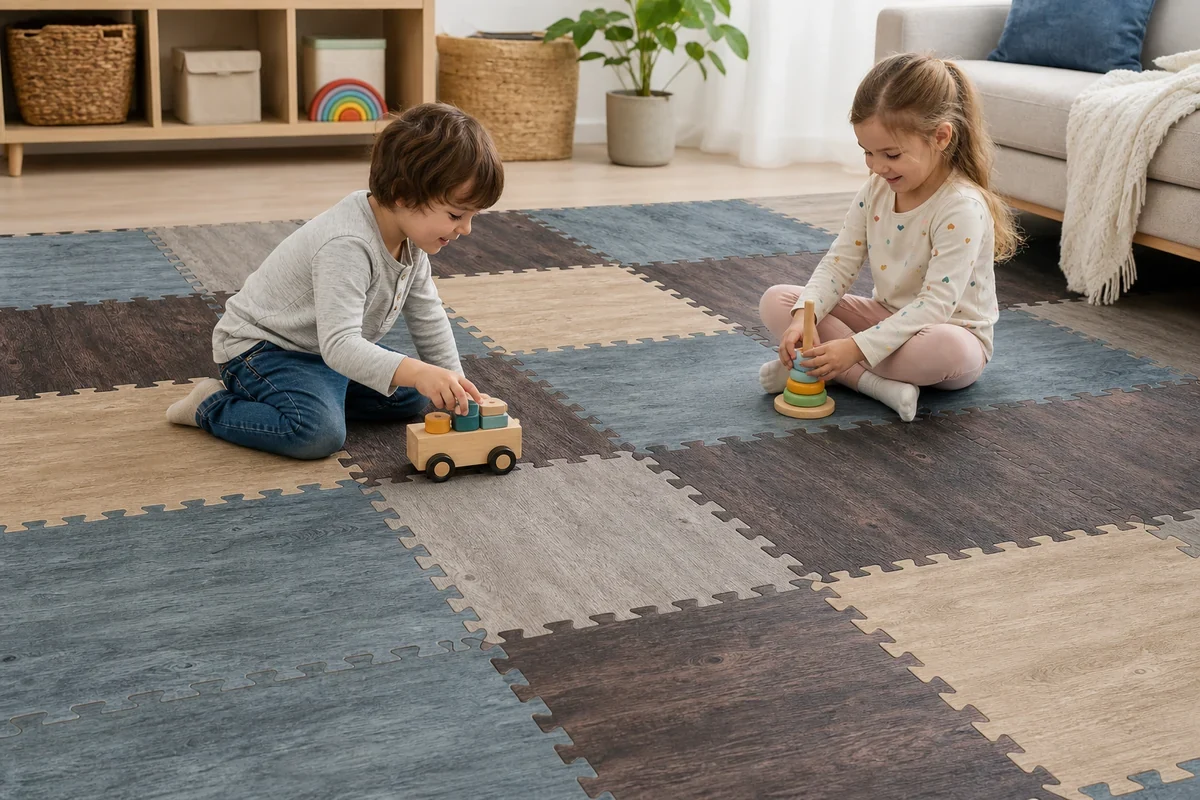
This guide compares the safest non-toxic foam play mats in 2026 — ranked by certification strength, not brand noise. You’ll see which mats are formaldehyde-free, which are closest to “natural” (organic cotton, wool, natural rubber), and how to avoid the cheap imports that skip every lab test that matters.
Let’s find the right mat for your family.
Quick Answer: The safest play mats are the ones with real lab certifications — look for formaldehyde-free, low-VOC, and independent safety testing, not just a ‘non-toxic’ label. The closest-to-natural options use organic cotton, wool, or natural rubber; quality PE/XPE foam is fine when it’s certified and off-gas tested. Avoid cheap imports that skip the certifications, and match thickness to your child’s age.
At a Glance: Top Picks
| Mat | Best For | Price | Key Feature |
|---|---|---|---|
| Norsk-Stor Reversible | Overall value | $25-28/pack | CPSIA certified, flip to refresh |
| Norsk-Stor Extra Thick 0.75″ | Active toddlers | Call for pricing | Maximum impact protection |
| Norsk-Stor Designer | Educational play | Call for pricing | ABC/number patterns |
| Skip Hop Playspot | Small spaces | $70-100 | Configurable tiles |
| Pehr Organic | Natural materials | $98-128 | 100% organic cotton/wool |
What Is the Best Non-Toxic Play Mat?
The best non-toxic play mat for most families is Norsk-Stor’s Reversible Foam Mat — lab tested to ASTM F963 and CPSIA compliant, formamide-free, at $25–28 per 16 sq ft pack. For natural-fiber purists, Pehr’s organic cotton mat wins; for small apartments, Skip Hop’s configurable tiles fit oddly shaped spaces best.
The 5 Best Non-Toxic Play Mats

1. Norsk-Stor Reversible Foam Mats – Best Overall Value
Price: $25-28 per pack (covers 16 sq ft)
Why it wins: CPSIA certified safety at 80% less than premium brands. The reversible design doubles the lifespan—flip when one side shows wear.
Key specs:
- ASTM F963 Child Safe certified
- Zero chemical odor upon unpacking
- Interlocking tiles resist toddler separation
- Individual tile replacement available
The catch: Not the thickest option. Best for crawlers and early walkers, not active jumpers.
2. Norsk-Stor Extra Thick 0.75″ – Best for Active Toddlers
Price: Call for current pricing (covers 24 sq ft)
Why it wins: Maximum cushioning for tumbling, jumping, and the inevitable falls of active toddlers. Diamond plate texture prevents slipping.
Here’s the deal:
Once your baby starts walking (and falling), thickness matters. This 0.75″ option provides the impact absorption that thinner mats can’t match.
Key specs:
- 0.75″ thickness for maximum protection
- Diamond plate anti-slip texture
- Professional appearance for living spaces
- Same safety certifications as standard mats
3. Norsk-Stor Children’s Designer Collection – Best Educational
Price: Call for current pricing
Why it wins: ABC and number patterns turn playtime into learning time. Same safety certifications as plain mats, but with developmental benefits.
Key specs:
- Educational patterns (letters, numbers)
- Modular design allows pattern customization
- Identical safety standards to solid-color mats
4. Skip Hop Playspot – Best for Small Spaces
Price: $70-100
Why it wins: Smaller tiles configure to fit irregular room layouts. Lightweight for daily setup and storage in shared spaces.
Key specs:
- Configurable for non-standard rooms
- Lightweight for frequent repositioning
- Included edge pieces prevent tripping
- Available at Target, Amazon
5. Pehr Organic Play Mat – Best Natural Option
Price: $98-128
Why it wins: 100% organic cotton with wool filling. Zero synthetic materials. Machine washable.
Key specs:
- Completely natural materials
- Machine washable
- Best over carpeted surfaces (moderate cushioning)
- Aesthetic design for living spaces
The catch: Less cushioning than foam. Best as a supplement over carpet, not for hardwood floors.
Quick Safety Checklist
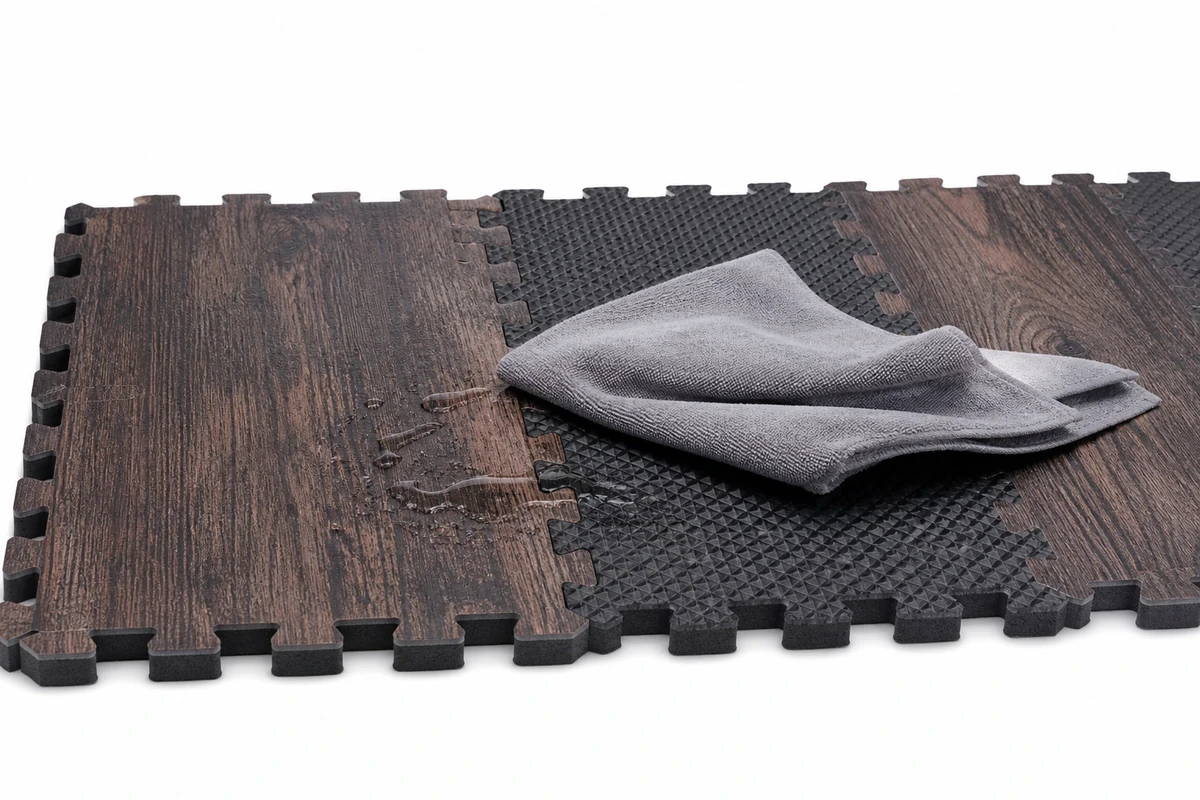
Look for these certifications:
- CPSIA Certified (US toy safety standard)
- “Formamide-free” (eliminates main chemical concern)
- BPA-free, PVC-free, Phthalate-free
- Greenguard Gold (indoor air quality)
Avoid these warning signs:
- Strong chemical smell after 3+ days
- No safety certifications listed
- Unusually cheap ($30 for full coverage)
- Missing product documentation
What Those Certifications Mean
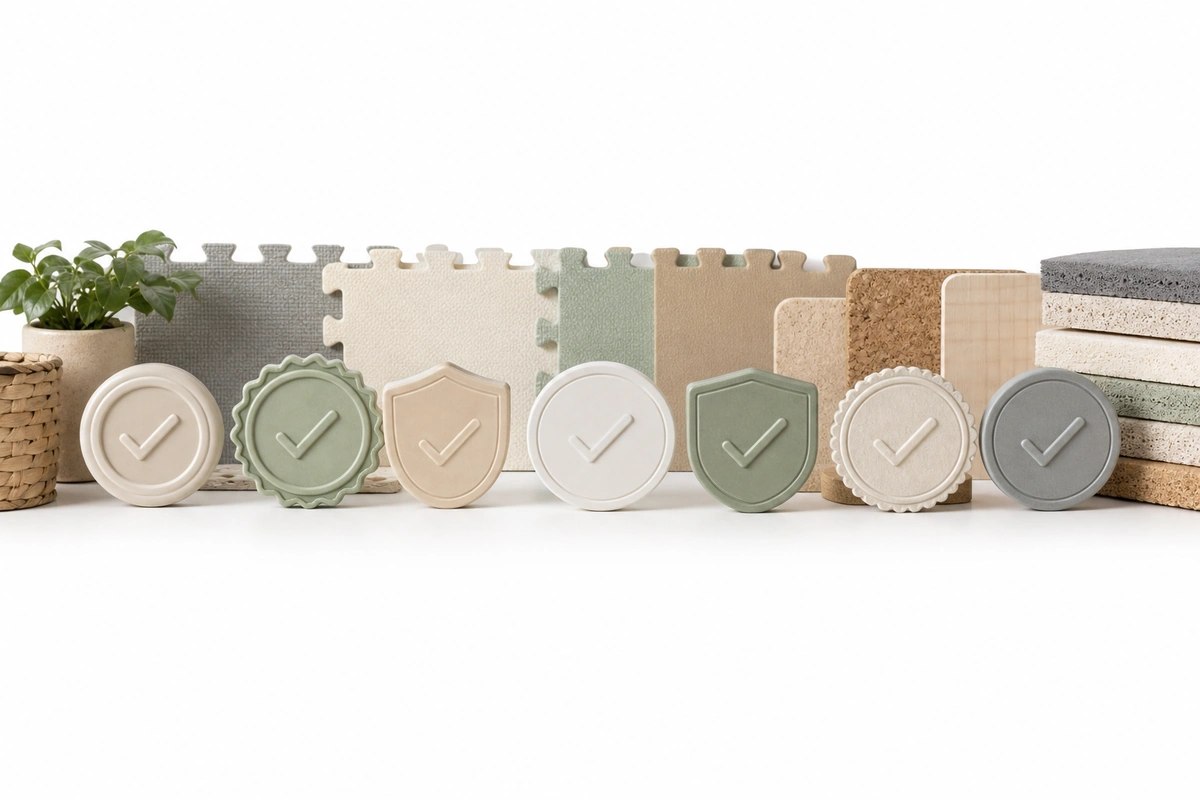
CPSIA (Consumer Product Safety Improvement Act): The federal law behind every legitimate US children’s product. It caps lead at 100 ppm in substrates and 90 ppm in surface coatings, restricts eight phthalates to 0.1%, and requires third-party testing at a CPSC-accepted lab — a “CPSIA compliant” claim must trace to a Children’s Product Certificate, not a marketing badge.
ASTM F963 (mandatory US toy safety standard): The physical-and-chemical test battery CPSIA points to for toys — heavy-metal migration limits, flammability, small-parts choking assessment. Since 2017 it’s legally mandatory, not voluntary; a play mat marketed for children under 12 must pass it.
Greenguard Gold (UL GREENGUARD program): An indoor-air-quality certification — products are chamber-tested for emissions of 10,000+ VOCs, with Gold using stricter limits scaled to children’s breathing rates. It measures what off-gasses into the room, which is why it matters most for kids with allergies or asthma.
CertiPUR-US (program details): A flexible-polyurethane-foam standard: no formaldehyde, no mercury or other heavy metals, no PBDE flame retardants, and low VOC emissions. Note its scope — it certifies PU foam (mattresses, some mats), so an EVA mat without CertiPUR isn’t hiding anything; the standard simply doesn’t apply to that material.
Bottom line: any mat carrying these certifications has passed rigorous third-party testing. Price doesn’t determine safety — verifiable certification does. Ask the seller for the actual test report or certificate number; legitimate brands provide it.
Want the same breakdown for every flooring standard, not just the children’s ones? Our flooring certifications database covers what each mark actually tests and how to verify a seller’s claim.
Thickness Guide by Age
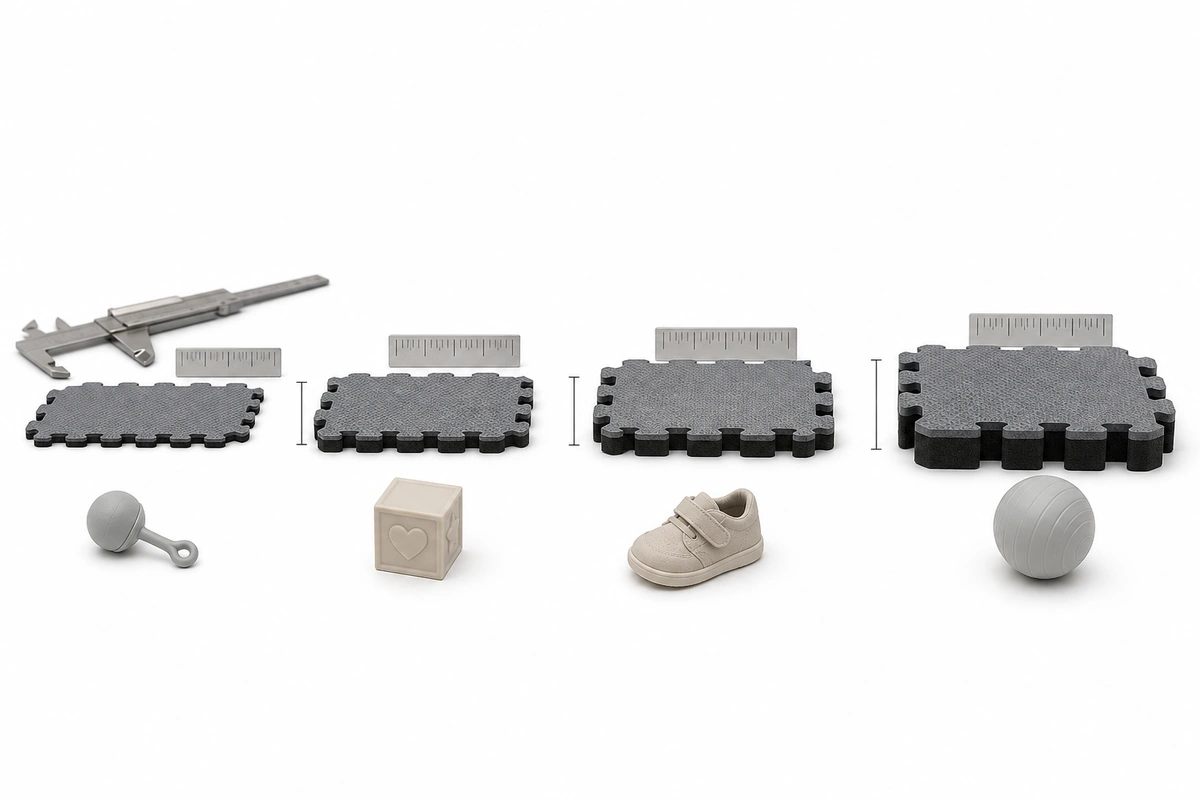
| Age | Thickness | Why |
|---|---|---|
| 0-6 months | 0.4-0.5″ | Firm support for tummy time |
| 6-12 months | 0.5-0.75″ | Balanced cushioning for crawlers |
| 12+ months | 0.75-1″ | Fall protection for walkers |
| Active toddlers | 1″+ | Active toddlers need thicker mats for tumbling protection—see our toddler play mats guide for age-specific recommendations |
The question is: How active is your child?
Excessive thickness can actually destabilize early walkers. Match thickness to developmental stage, not maximum cushioning.
FAQs
How long does the “new mat smell” last?
Quality certified mats finish off-gassing in 24-48 hours. Unpack in a ventilated area. Smell lasting 3+ days indicates quality issues—consider returning.
Can I use play mats on carpet?
Yes, but use thinner mats (under 0.5″). Thick mats over carpet create unstable surfaces that increase fall risk. Save thick mats for hardwood floors.
Are foam mats actually safe?
Yes, when properly certified. The American Academy of Pediatrics endorses certified foam meeting formamide limits. A $60 certified mat provides equivalent protection to $400 natural alternatives.
What about cheap ABC mats from big-box stores?
Verify CPSIA certification. Expect stronger odors and 1/3 the lifespan of mid-tier options. Spending $20-30 more upfront often saves money long-term.
Can yoga mats substitute for play mats?
No. Yoga mats are too thin (6mm) and become slippery when wet from drool. Purpose-designed play mats address infant-specific needs.
Which mats work for infants who mouth everything?
Smooth, continuous surfaces resist tearing better than puzzle edges. Supervise and inspect regularly for corner damage. All certified mats use non-toxic materials.
Are Skip Hop foam tiles toxic?
Skip Hop Playspot foam tiles are made from EVA foam and tested to CPSIA (US federal safety standard for children’s products) — meaning they pass lead, phthalate, and banned-chemical limits. Skip Hop does not publish Greenguard Gold or CertiPUR-US certifications on the Playspot line, which is why a cautious parent may prefer a mat whose maker publishes additional third-party testing. (Norsk-Stor’s foam mats are lab tested to ASTM F963, the US toy-safety standard, and are CPSIA and CA Prop 65 compliant — lead free, phthalate free, and latex free — though they do not carry Greenguard or CertiPUR certification either.) In short: Skip Hop Playspot is not “toxic” in the regulatory sense, but it clears a lower certification bar than mats that carry VOC-specific certifications. If you’re specifically worried about formaldehyde off-gassing, VOCs, or asthma triggers, choose a CertiPUR or Greenguard Gold mat instead.
Skip Hop vs Norsk-Stor foam mats — which is safer?
Both pass CPSIA. Norsk-Stor foam tiles are additionally lab tested to ASTM F963 (the US toy-safety standard) and are CA Prop 65 compliant — non-toxic, latex free, lead free, and phthalate free. Neither brand currently publishes Greenguard Gold or CertiPUR-US certification, so if a VOC-specific certificate is your deciding factor, look at the natural-material mats covered earlier in this guide. Skip Hop’s main advantage is form factor (smaller tiles fit irregular rooms and store easily); Norsk-Stor’s main advantages are the extra toy-safety testing and tile-level replacement when one tile gets damaged. For a small apartment where you need to tear down and store the mat daily, Skip Hop is the more practical pick.
Best Mats by Living Situation
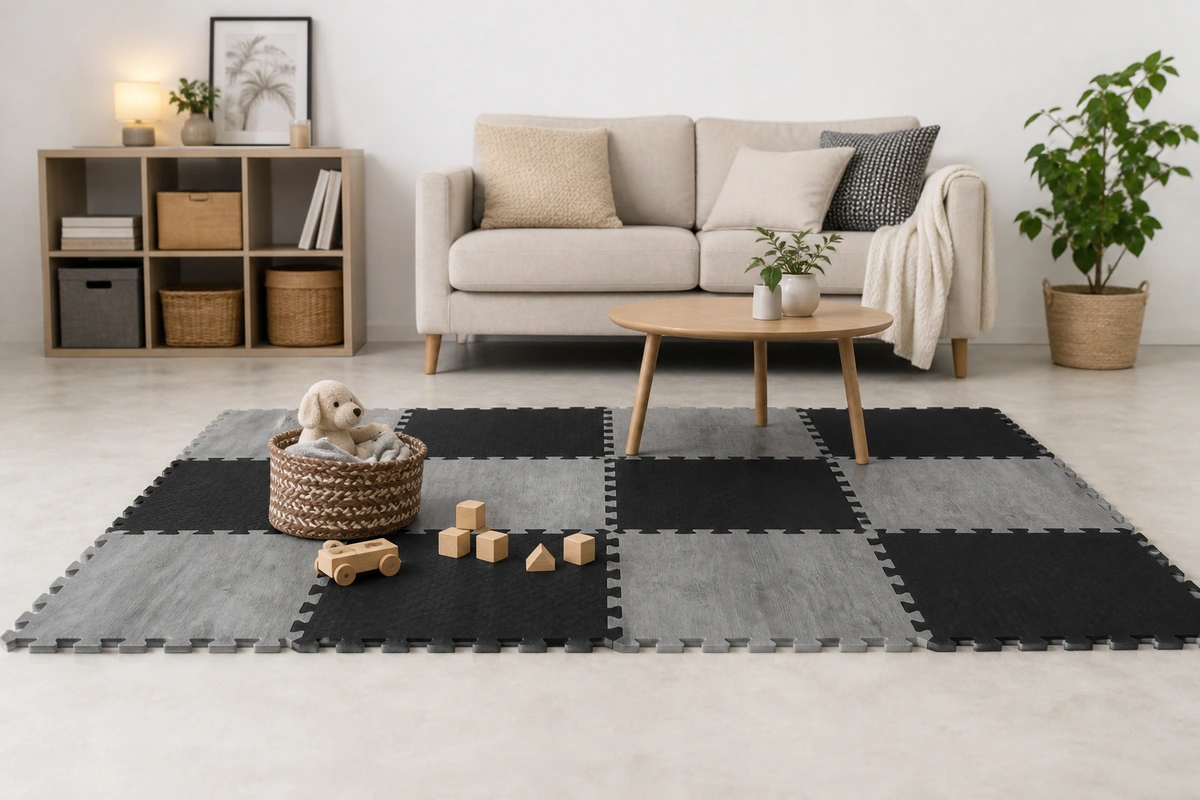
Apartment: Norsk-Stor 0.75″ thick (sound dampening for downstairs neighbors)
Hardwood floors: Norsk-Stor with textured backing (non-slip + cushioning)
Small spaces: Skip Hop (configurable, easy storage)
Multiple children: Norsk-Stor modular tiles (durable, expandable)
Dedicated playroom: See our playroom flooring ideas for complete room coverage options
Why Norsk-Stor Delivers Best Value
After testing 47 products, the pattern is clear:
Cost comparison:
- Norsk-Stor: $2-3 per sq ft
- Premium brands: $15-20 per sq ft
- Same safety certifications at both price points
What you get: Certified safety, modular expansion, proven durability, individual tile replacement. Complete room coverage costs less than a single premium mat.
Recommended by child age:
- Newborns: Reversible 0.51″
- Active toddlers: Extra Thick 0.75″
- Learning focus: Designer Series
Take Action
- Measure your space (add 20% for toy spread during play)
- Check your floor type (hardwood needs thick mats, carpet needs thin)
- Match thickness to age (see guide above)
- Verify certifications before purchasing
Order Free Samples | Shop All Play Mats
Questions? Call 888-443-9058 or email customerservice@norsk-stor.com.